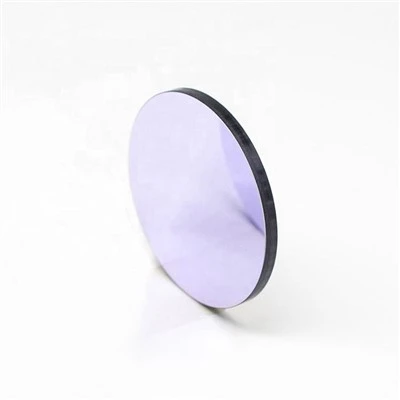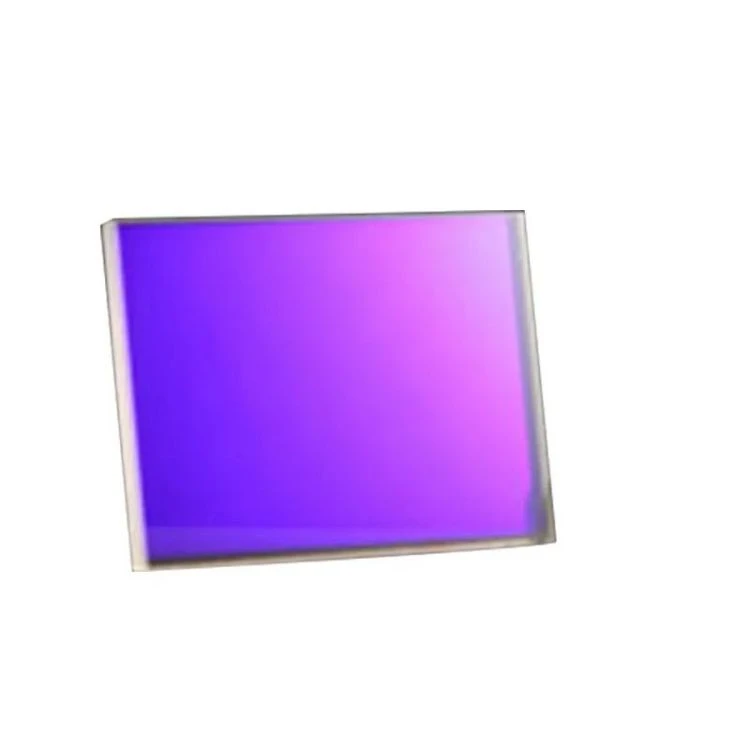

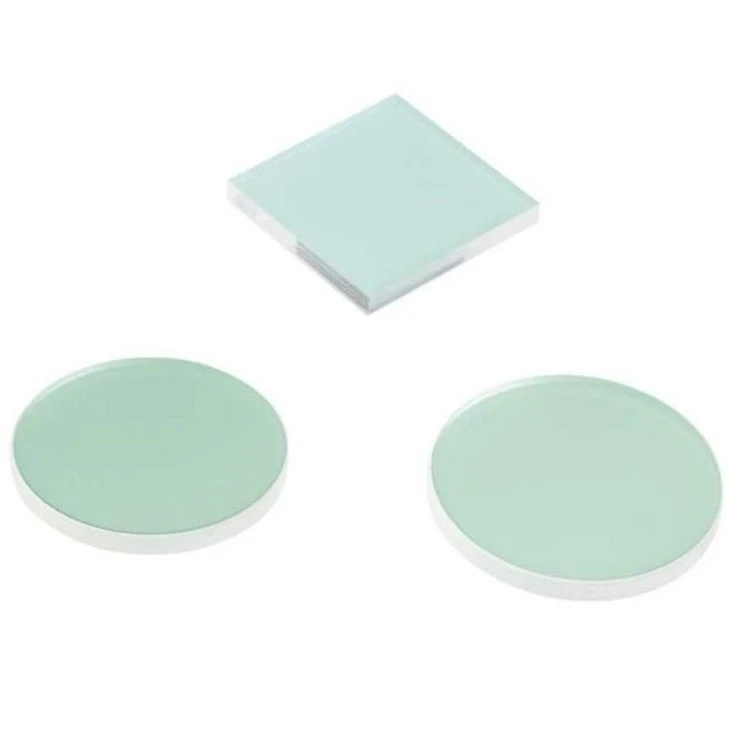
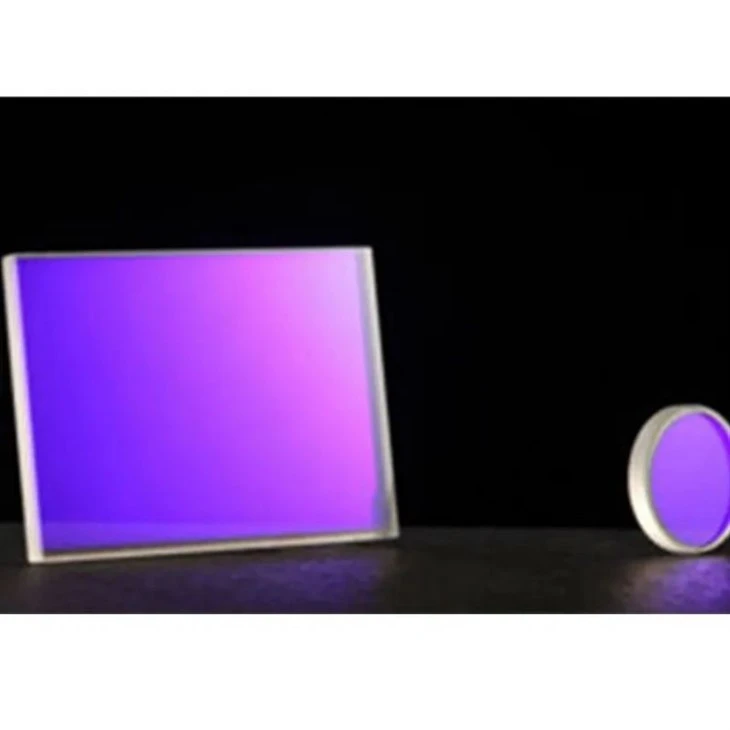
Shortpass Dichroic Mirror Shortpass Dichroic Filter
Shortpass dichroic mirrors are specialized optical filters that leverage the properties of thin film coatings to manipulate light based on wavelength. They consist of an optical glass substrate coated with a dielectric layer carefully engineered to obtain sharp transitions between reflection and...
- Fast Delievery
- Quality Assurance
- 24/7 Customer Service
Product Introduction
Shortpass dichroic mirrors are specialized optical filters that leverage the properties of thin film coatings to manipulate light based on wavelength. They consist of an optical glass substrate coated with a dielectric layer carefully engineered to obtain sharp transitions between reflection and transmission bands. By controlling the optical thickness of the layered coating, shortpass dichroic mirrors can be designed to reflect shorter wavelengths of light while transmitting longer wavelengths.
Our high-performance shortpass dichroic mirrors are precision-engineered with proprietary dielectric coatings to separate light based on wavelength optimally. Customizable cutoff wavelengths from 400 nm to 2 μm and ultra-sharp transitions between high reflectivity and transmission allow exceptional spectral filtering and beam splitting. Operate at 45° incidence to reflect over 99% of shorter wavelengths while transmitting over 90% of longer wavelengths. It is ideal for demanding optics applications requiring precise wavelength selection like fluorescence imaging, laser line separation, and optical filtering. They are rigorously tested and built to handle high power levels with minimal beam shift for long lifetimes. For unmatched dichroic performance, trust our shortpass dichroic mirrors. Contact our photonics experts today.
Features
- Proprietary ultra-smooth dielectric coatings for superior dichroic performance
- Customizable cutoff wavelengths from 400 nm to 2 μm
- Ultra-sharp transition between reflection and transmission bands
- Reflects over 99% of shorter wavelengths
- Transmits over 90% of longer wavelengths
- Operates at 45° angle of incidence
- Enables exceptional spectral filtering and beam splitting
- Ideal for fluorescence imaging, laser line separation, optical filtering
- Handles high laser power levels with minimal beam shift
- Induces low wavefront distortion to maintain system alignment
- Rigorously tested for long-lifetime reliability
- Custom sizes and mounting options available
Parameters
|
Product Name |
Shortpass Dichroic Mirror |
|
Substrate Material |
Optical Glass |
|
Coating Material |
Dielectric thin film |
|
Wavelength Range |
400nm - 2μm |
|
Cutoff Wavelength |
Customizable |
|
Reflectance (shorter λ) |
>99% |
|
Transmittance (longer λ) |
>90% |
|
Transition Width |
<10nm |
|
Angle of Incidence |
45° |
|
Wavefront Distortion |
Λ/10 PV |
|
Laser Damage Threshold |
10J/cm2 |
|
Temperature Range |
-20℃ to 80℃ |
|
Humidity Resistance |
0-90% non-condensing |
|
Size Range |
12.5mm - 175mm diameter |
Applications
- Fluorescence Microscopy
The mirrors direct specific emission wavelengths to the detector while passing excitation wavelengths. This enables fluorescence imaging at select wavelengths.
- Laser Beamsplitting
The sharp transition between reflection and transmission allows a single beam to be precisely split into multiple beams with different wavelengths. This is useful for combining or separating laser lines.
- Wavelength Division Multiplexing
The mirrors can combine multiple wavelength channels onto a fiber optic channel for dense wavelength division multiplexing systems.
- Laser Pumping
They reflect pump laser light onto a gain medium while transmitting the longer laser wavelength. This is a common technique for optically pumping lasers.
- Spectroscopy
Shortpass dichroic mirrors direct a defined spectral band to an analysis system while rejecting all longer wavelengths for selective spectroscopy.
- Optical Filtering
They can filter out shorter undesirable wavelengths like UV or IR radiation while transmitting select visible or near-IR bands.
What is the function of the dichroic mirror in a fluorescence microscope?
The dichroic mirror serves a critical function in fluorescence microscopy - it acts as a wavelength-selective filter to direct excitation light to the sample while transmitting emitted fluorescence to the detector.
Precisely, a shortpass dichroic mirror reflects shorter wavelength excitation light (typically UV or blue light from a mercury or LED source) down through the objective to excite fluorescent molecules in the sample.
The excited fluorophores emit longer wavelength light (in the visible range), which passes through the dichroic mirror. This allows only the fluorescence emission to reach the eyepiece or camera detector, enabling fluorescent imaging.
The dichroic mirror's sharp cutoff between reflection and transmission allows it to very efficiently reflect shorter wavelength excitation light (usually >90% reflection below the cutoff wavelength) while maximally transmitting the longer wavelength emission light (usually >90% transmission above the cutoff wavelength).
This spectral selectivity and efficiency are vital for high-contrast fluorescence imaging. The dichroic mirror thereby acts as the key optical element that separates excitation and emission light to form a fluorescence image free of excitation light that would typically overwhelm the much weaker fluorescent signal.
Hot Tags: shortpass dichroic mirror shortpass dichroic filter, China, suppliers, manufacturers, factory, customized, wholesale, bulk, pricelist, in stock, for sale
No Information
No Information