Global And Chinese Infrared Cutoff Filter (IRCF) Industry Status: Strong Downstream Demand Drives Industry Expansion
Aug 15, 2023
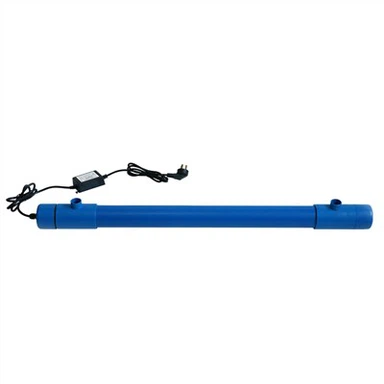
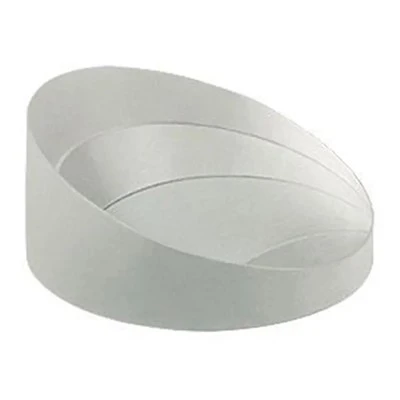
An infrared cutoff filter (also called an infrared filter or heat-absorbing filter) is applied to filter the infrared band. For example, installed incandescent lamp equipment (such as slides and projectors) can block unwanted heat burns the lens; installed in a solid-state electronics (CCD or CMOS) camera, you can prevent infrared through the lens of the camera caused by picture distortion.
1, infrared cutoff filter market development status
According to the "2021 China Infrared Cutoff Filter (IRCF), Industry Analysis Report-Industry Supply and Demand Status and Development Trend Outlook" released by GuanReport.com, the development of the infrared cutoff filter industry and the rise of intelligent terminal enterprises have a close relationship. According to Wind data, with the increase in demand for smartphones and in-vehicle, home, security, and other fields, the global infrared cutoff filter shipments are also rising, with 3.79 billion pieces in 2017, increasing to 5.566 billion in 2020. They are expected to reach about 8 billion pieces in 2024.
Global Infrared Cutoff Filter (IRCF) Industry Shipment Forecast 2017-2024

2, Infrared Cutoff Filter (IRCF) downstream market development situation
According to the information released by GuanRanReport.com, in addition to continuing to occupy an important position in traditional optics, infrared cutoff filter (IRCF), with its outstanding high precision and high-performance qualities, is widely used in the information industry, consumer electronics, and other fields, mainly used in the camera module, is a smartphone camera, video surveillance lens, digital products lens and different high-precision optical lens necessary components.
Infrared cutoff filter (IRCF) industry application areas

(1) Smartphone market
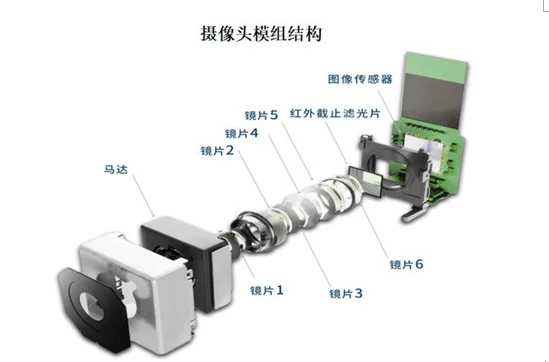
The infrared cutoff filter is a necessary component of the camera by realizing the cutoff of the near-infrared light area to eliminate the influence of infrared light on the imaging.
Camera module structure
1) Smartphone market status
According to IDC data, in 2020, global smartphone shipments reached 1.240 billion units, and loads in the first half of 2021 amounted to 652 million units, a year-on-year growth of 17.4%. In the long run, the global smartphone market shipments will continue to be high and are expected to be around 1.4 billion units. In the Chinese market, according to the data, in 2016-2020, China's smartphone market penetration rate further sunk, the scale of demand stabilized, smartphone shipments began to maintain a stable level, the country shipped a total of 326 million smartphones in 2020, and the first half of 2021, the overall market shipments of 164 million units, a year-on-year increase of 6.5%.
Global smartphone shipment statistics in the first half of 2012-2021

China's smartphone shipment statistics in the first half of 2012-2021

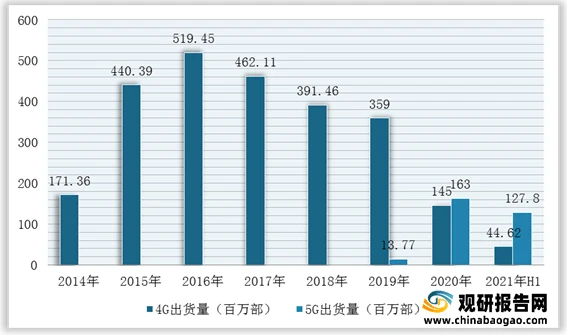
At the same time, China's 5G technology breakthroughs and commercial expansion to promote 5G smartphones accelerate the sinking of the low-end market and comprehensively facilitate the replacement of smartphones, driving the rapid growth of infrared cutoff filter (IRCF) demand. According to ICT data, in the first half of 2021, the cumulative shipments of domestic 5G cell phones amounted to 128 million, accounting for 73.4% of cell phone shipments in the same period. In the future, due to the replacement wave brought about by the 5G smartphone update, it will continue to serve as the core terminal market for global infrared cutoff filters (IRCF).
China's smartphone shipment statistics from January to June 2014-2021
2) Rapid increase in the penetration rate of multi-camera smartphones
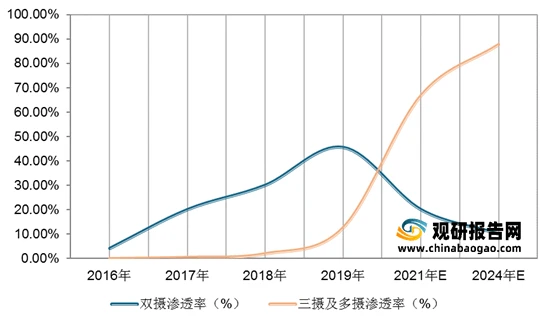
As consumers' requirements for cell phone photography become higher and higher, single cameras, such as HD, wide-angle, bokeh, slow playback, etc., are challenging to meet consumer demand, and multi-camera phones should be born. Since 2016, the outbreak of dual cameras began, and consumer demand for multi-camera cell phones has continued to rise. According to the data, cell phones' rear double camera penetration rate grew from 4.1% in 2016 to 45.6% in 2019. Meanwhile, the penetration rate of the triple-camera and above triple-camera multi-camera cell phones is 12.6%, and as of the first quarter of 2021, the global smartphone rear triple camera and above accounted for 66.7%, and the rear triple camera is expected to account for 60.9% in 2024. The quad camera accounted for 26.8%.
Mobile Phone Camera Penetration Rate, 2016-2024
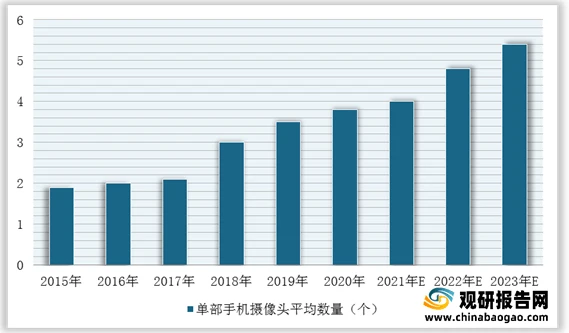
According to the China ICT Institute data, the average number of single cell phone cameras in China increased yearly from 2015 to 2020 and is expected to reach 5.1 in 2023. This shows a significant demand space for the infrared cutoff filter (IRCF) industry.
Forecast of the average number of single cell phone cameras in China, 2015-2023
3) Upgrading of smartphone lenses to promote
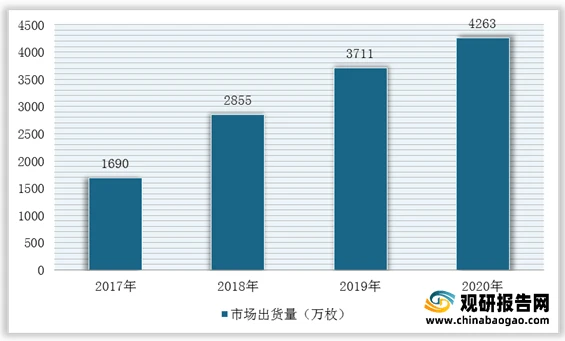
Smartphone as IRCF is most widely used in the field, with "thin and light," high flatness, easy automated processing, good optical properties, sound color reproduction, etc., especially resin IRCF not only to solve the problem of low-angle light shift better, spectral accuracy is higher, but also take into account the low thickness of the camera module, Large area, and improve the RGB balance effect. In addition, the rapid growth of the IRCF market demand for photo function has become an essential factor in guiding consumers to consider, so innovative terminal manufacturers continue to make efforts in the optical field, further driving the market demand for cell phone IRCF. (2) Car camera market camera is an essential component of intelligent driving, and a complete ADAS system needs to include at least six cameras (1 front view, one rear view, four surround view). In contrast, the number of cameras in high-end intelligent cars can reach 8 or 12 in the future. Therefore, the market demand for Advanced Driver Assistance Systems (ADAS) has become a strong guarantee for the continuous growth of the in-vehicle camera market, and it will also become one of the critical driving forces for the infrared cutoff filter (IRCF) industry. According to OFweek Intelligent Vehicle Network estimates, China's car camera shipments of 16.9 million pieces in 2017 to 42.63 million pieces in 2020; the average number of domestic automotive cameras in 2020 is 1.3, and the market space is enormous.
Statistics of China's car camera shipments from 2017 to 2020
The average number of car cameras carried in China in 2018-2020

Penetration rate of each type of car camera in 2019-2020

In addition, with the gradual deepening of ADAS and autonomous driving, the number of cameras required to be carried in a single vehicle is increasing. According to the data, the global in-vehicle camera market size was 72.31 billion yuan in 2019, and the Chinese market size is 4.1 billion yuan; the global in-vehicle camera market is expected to reach 27.3 billion U.S. dollars by 2025, of which 23.72 billion yuan is in the Chinese market.
Global in-vehicle camera market size and forecast from 2015-2025

China Car Camera Market Size and Forecast, 2015-2025

IRCF is usually installed after the camera lens, which is an essential optical device of an in-vehicle camera, and selects the required radiation band by approaching the surface of the image sensor to realize the image quality improvement and enhance the imaging quality so that the imaging is more in line with the driver assistance requirements of ADAS.
According to HIS Markit, LMC Automotive forecasts global car sales in 2022 will return to the 90 million sales level. At the same time, as the ADAS penetration rate continues to increase, the global new car ADAS-equipped rate is expected to reach 50% in 2022. With an average of 8 cameras to be configured for each car equipped with ADAS, the global car IRCF market size will likely be about 2.9 billion yuan by then, and the cost of infrared cutoff filters will account for more than 3%.
Global in-vehicle IRCF market size forecast 2017-2022
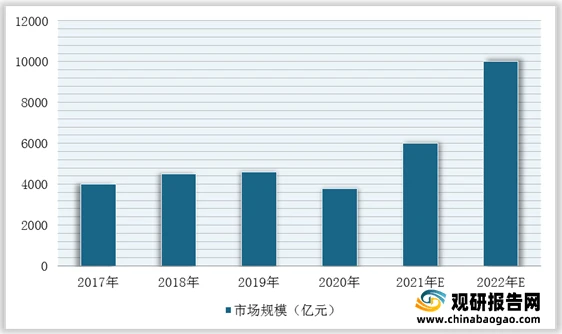
(3) Smart home
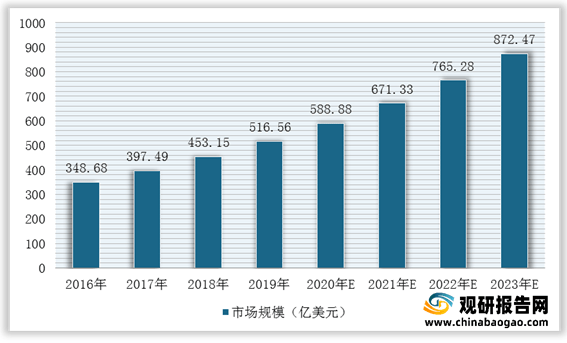
At this stage, the mainstream recognition mode of the intelligent home mainly has voice recognition and image recognition, and the camera is the primary hardware device to realize image recognition, innovative home products on the camera large-scale demand. Infrared cutoff filters as an essential component of the smart home camera, and the future market space is enormous. According to Strategy Analytics data, global consumer spending on smart home cameras (including visual doorbells) was nearly $51.7 billion in 2019 and grew at a CAGR of 14% to almost $87.2 billion in 2023, and demand for IRCFs, as an essential component of the camera, will grow at a similar proportion.
2016-2023Global Smart Home Camera Sales Statistics