

2022 Top 10 Social Influence Events in China's Optical Sector (Light10)
Aug 21, 2023
01 Annual List
2022 China's Top 10 Social Influence Events in Optics (Light10) is an annual list jointly launched by leading journals of China's Action Plan for Excellence in Science and Technology Journals (APEJs) and ScienceNet, the flagship brand of science communication under China Science News, aiming to look for those moments of high light in China's optics field that make us moved, proud and remembered forever, The purpose of this annual list is to find those high "light" moments in the field of optics in China, those moments that move us, make us proud, and make us remember them forever.
|Light: Science & Applications
Light: Science & Applications (https://www.nature.com/lsa/), founded in March 2012, is the first fully peer-reviewed, fully open-access international journal of optics in China, co-sponsored by the Changchun Institute of Optics, Precision Machinery, and Physics of the Chinese Academy of Sciences (CAS) and the Optical Society of China (OSC), and published in cooperation with Springer Nature. It is the first Chinese fully peer-reviewed, fully open-access international optics journal in English, with an impact factor of 20.257, ranking among the top three of 120 optics journals, and has been ranked among the top three optics journals worldwide for eight consecutive years.
|Science Net|Science Net
ScienceNet (https://www.sciencenet.cn/), with the core mission of "building a global Chinese science community," was officially launched in January 2007 and is operated by China Science News. As the world's largest Chinese-language science community, Sciencenet is committed to serving the Chinese science and higher education community in all aspects and building a new online media for Chinese scientists worldwide based on the online community to promote science and technology innovation and academic exchanges.
02 Candidate Events
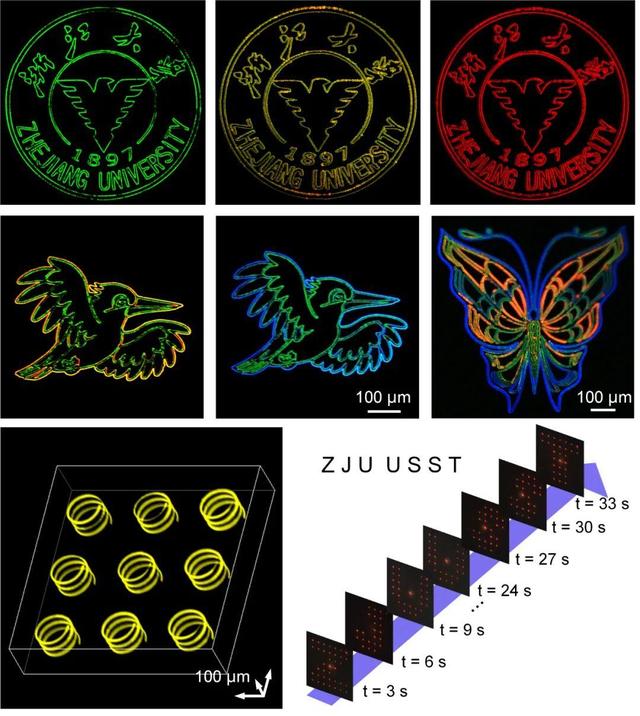
1 Femtosecond Laser "Knife" Opens New Direction for Next-Generation Display and Storage Technology
When a femtosecond laser is focused on the inside of a transparent material, a series of highly localized physicochemical processes based on various nonlinear effects are generated. Professor Qiu Jianrong's team at Zhejiang University and Dr. Tan Dezhi's team at Zhejiang Laboratory discovered for the first time the new phenomenon of femtosecond laser-induced micro-nano-structures in complex systems, revealing the law of spatially selective mesoscopic-scale phase splitting and ion exchanges, and pioneered a new femtosecond laser technology for 3D extreme fabrication, which realizes arbitrary 3D semiconductor nanocrystalline structures with controllable and continuously adjustable bandgap and luminescence in a colorless transparent medium. Using such 3D nanostructures, they successfully demonstrated critical applications in cutting-edge fields such as ultra-large-capacity and ultra-long-life information storage, highly stable Micro-LED arrays, and dynamic stereoscopic color holographic displays. The paper is published in.
2 Breaking the bottleneck of semiconductor laser technology! Topological Cavity Surface Emitting Lasers Introduced
Lu Ling's team at the Institute of Physics, Chinese Academy of Sciences (CAS), has successfully applied the previously original "Dirac vortex" topological cavity to a surface-emitting semiconductor laser chip, breaking the technological bottleneck of semiconductor lasers from the principle and at the same time improving its emitted power and beam quality by many orders of magnitude. The developed topological cavity surface-emitting laser will be used in fields such as face recognition for cell phones, LIDAR for autonomous driving, and three-dimensional perception for virtual reality. The relevant research results were published in (see TCSEL.com).

3 Ultra-high-resolution quantum dot light-emitting diode opens up a "meta-universe" pathway
Developing high-resolution near-eye displays that can output massive amounts of information in a tiny space is critical to entering the "metaverse." Quantum dot materials have broad application prospects in light-emitting displays due to their excellent characteristics, such as high color purity and luminous efficiency. In near-eye display, eliminating the "window effect" requires the display device to reach 10,000 PPI (the number of pixels per inch). So, how to realize the very high-resolution pixelization of quantum dots light-emitting diodes is a core key issue. Professor Li Fushan's team at Fuzhou University and the Ningbo Institute of Materials of the Chinese Academy of Sciences have combined heterogeneous interface quantum dot self-assembly technology and transfer printing technology to realize defect-free patterning at the submicron scale while effectively blocking leakage currents and, for the first time realized quantum dot light-emitting diodes with both high luminous efficacy and ultra-high resolution (up to 25,400PPI), which opens up a way to the "meta-universe." A new path to the "meta-universe" has been opened. Related results were published.

4 What you see with your own eyes is always better than what you think: How nanoscale "necrotic vesicles" kill cells
The mysteries of life are often hidden in tiny spaces that we can hardly perceive. Revealing the intrinsic law of cellular in situ signaling is of great scientific significance to extending the human knowledge system and the translational application under the guidance of new targets/new theories. The team of Academician of the Chinese Academy of Sciences (CAS), Professor Jiahuai Han and Associate Professor Xin Chen from Xiamen University has developed the Single Molecule Localized Ultra-Resolution Imaging (STORM) technology, which reveals for the first time the organization of the 100-nanometer signaling hub, "necrotic vesicles," in the cell and their determining role in cell death. This achievement breaks through the bottleneck of low-resolution optical imaging in life science research. It opens the door for future exploration of the nanometer-precise structure and function of key signaling hubs in cellular in situ. The related results are published in.

5 Quantum direct communication distance reaches 100 kilometers for the first time
The team of Long Guilu, vice president of the Beijing Institute of Quantum Information Science and professor at Tsinghua University, and the team of Lu Jianhua, professor at Tsinghua University, have collaborated to design and realize a new system of quantum direct communication with a hybrid coding of phase quantum states and time-stamped quantum states, with a communication distance of 100 kilometers, which is the longest quantum direct communication distance in the world at present. Such a metric can realize point-to-point quantum direct communication between cities under no-relay conditions and, at the same time, can support some applications of wide-area quantum networks based on secure classical relaying. The related results are published in.

6 New for the ages, 46th-order nonlinear fluorescence empowers confocal 62nm resolution
Confocal microscopy, which has been popularized for decades, has the advantages of a simple optical path, visible and available, and is widely used. Still, the resolution is limited, usually above 200 nm. To this end, Professor Zhan Qiuqiang's group at South China Normal University proposed the mechanism of migrating photon avalanche, overcoming the photon avalanche effect is difficult to observe at the nanoscale of the long-standing problem, in the room temperature nanoprobe to achieve the highest international reports of 46th-order nonlinear response fluorescence, based on the use of only a single-beam, 300uW, continuous laser to achieve the resolution of 62nm (λ/14), which is four times the resolution of conventional confocal about, and realized the observation of subcellular structure. This achievement breaks the bottleneck of confocal technology by purely physical methods and provides a simple way for biomedical super-resolution imaging. In addition, it also has significant application value in the frontier fields of optical sensing, optical storage, and lithography, which need to break through the diffraction limit. The related results are published in.

7 Chinese scientists put forward a new idea for high-precision spectral measurement: double optical comb photothermal spectroscopy
A team of researcher Qiang Wang from the Changchun Institute of Optical Precision Machinery and Physics, Chinese Academy of Sciences, and a team of Prof. Wei Ren from the Chinese University of Hong Kong creatively proposed the dual optical comb photothermal spectroscopy method (DC-PTS for short), which for the first time realizes the measurement of photothermal spectroscopy of gas molecules based on optical frequency comb. The technique can complete broadband, acceptable spectral size of 0.17 microliter sample gas within ten milliseconds and can realize the simultaneous detection of multiple trace gases with extremely high sensitivity. This research breaks the limitations of traditional laser spectroscopy gas sensing technology, which can provide new ideas for hazardous gas detection, disease breath diagnosis, and atmospheric monitoring. Related results are published in.

8 Novel silicon-based optoelectronics on-chip integration system launched
Peking University Professor Wang Xingjun's group and the University of California, Santa Barbara Professor John E. Bowers' group reported for the first time in the world a new silicon-based optoelectronics on-chip integrated system driven by integrated microcavity optical combs, and the research team took three years of collaborative research, and finally overcame this global problem. This work is the perfect combination of integrated optical comb and silicon light, which is the focus of attention of the world's academia and industry, and it opens up the last kilometer of the optical frequency comb from the laboratory to the industrialization so that it can make this technology towards large-scale applications. At the same time, it also solves the global problem of multiple parallel light sources for silicon light so that silicon light has its brain. Related results are published in.

9 Self-learning programmable photonic chip was introduced
The photonic chip consists of densely discrete integrated optical components that can provide ultra-wide analog bandwidth with information throughput rates on the order of Petabits/s. Considering that the current design, processing, and packaging cycles of photonic chips are still long, new photonic chips that are programmable and reconfigurable and support multiple information processing functions are of great value for research and application. However, the control problem of programmable photonic chips still needs to be fully solved, which limits its controllable dimension and practical applications. Relying on the State Key Laboratory of Information Photonics and Optical Communication of Beijing University of Posts and Telecommunications (BUPT), Dr. Xingyuan Xu, from the team of Prof. Kun Xu, BUPT, in collaboration with Prof. Arthur Lowery, Prof. Arnan Mitchell, and Dr. Guanghui Ren of Australia, has proposed and realized a self-learning programmable photonic chip. Accurate recovery of phase-frequency characteristics is achieved through an on-chip reference path, which recognizes a self-learning broadband photonic chip that can realize an arbitrarily specified function after 25 iterations of training. The technique can be applied to the phase recovery of arbitrary two-port photonic devices, and combined with the self-learning algorithm, it is expected to solve the crosstalk and control problems of photonic chips completely. It has broad application prospects in optical communication, signal processing, quantum computing, and artificial intelligence. The related results were published as a cover paper.

10 Cracking the stability problem of chalcogenide LEDs, ultra-long-life chalcogenide LEDs are born
The team of Prof. David Di and researcher Baodan Zhao from Zhejiang University has provided a solution to the stability problem of chalcogenide LEDs. They introduced a bipolar molecular stabilizer into the light-emitting layer of the device, inhibited ion migration under an electric field, and obtained chalcogenide LEDs with a much longer lifetime than expected. 32,675 hours (3.7 years) of operating life of these near-infrared chalcogenide LEDs under the optical power equivalent to that of high-brightness OLEDs has met the practical application for the first time. At even lower irradiance, the lifetime expectation will reach even 270 years. The record-breaking devices were operated for five months (3,600 hours) at a constant current of 5 mA/cm² without any significant decrease in irradiance. The related results are published in.

11 Chinese scientists realize nanoscale light manipulation
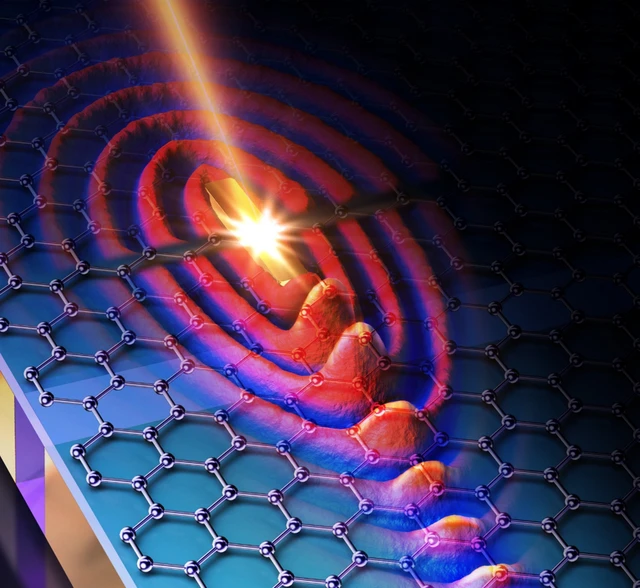
Nanoscale optoelectronic fusion is an inevitable trend for future high-performance information devices, and how to precisely manipulate light waves at the atomic scale is one of the most critical scientific issues. To this end, Qing Dai's group at the National Center for Nanoscience (NCN) and his collaborators constructed a high-quality graphene/alpha-phase molybdenum oxide heterojunction, which realizes the topological transition of polarized excitations with equal-frequency dispersion profiles and breaks the bottleneck of the phonon polarized excitations transmission limited by the material's crystallographic orientation. The nano-focusing and diffraction-free channelized communication of polarized excitons is further achieved using a silica planar lens with a width of only 1.5 μm. This study dramatically improves the precise manipulation of photons. It provides an essential foundation for the design of sub-wavelength nano-optical devices and the further realization of on-chip optoelectronic interconnection functions. The results were published in the same issue with news and review articles highlighted in the same case.
12 Chinese Scientists Obtain the First Nanoscale Optically Sculpted 3D Ferroelectric Domain Structure
A research team led by Yong Zhang, Min Xiao, and Shining Zhu of Nanjing University has invented a new "non-reciprocal femtosecond laser polarization of ferroelectric domains" technology, in which a femtosecond pulsed laser is focused on the inside of the crystal of lithium niobate to create an effective electric field inside the crystal by controlling the direction of the laser movement. By controlling the direction of laser movement, an effective electric field is formed inside the crystal, realizing the direct writing and erasing of three-dimensional domain structure. This new technology breaks through the light diffraction limit of the traditional femtosecond laser. It reduces the size of the three-dimensional domain structure of lithium niobate carved by light from the conventional 1-micron scale (equivalent to one-fiftieth of a hair) to the nanometer scale for the first time to 30 nanometers, significantly improving the processing precision. This major invention may open up a new track of optoelectronic chip manufacturing in the future and is expected to be used for chip preparation of critical optoelectronic devices such as optoelectronic modulators, acoustic filters, non-volatile ferroelectric memories, etc., which have a wide range of applications in 5G/6G communications, optical computing, artificial intelligence, and other fields. Related results are published in.

13 A "photonic highway" that never gets clogged: reflection-free topological waveguides
In conventional optical devices, back reflection occurs when light encounters obstacles such as defects, disorder, sharp corners, etc., severely degrading the transmission performance of the optical device. In terms of the underlying physical principle, the reason is that conventional optical devices have two waveguide modes transmitting in opposite directions simultaneously. To overcome this limitation, researchers including Associate Professor Zhen Gao from Southern University of Science and Technology (SUSTech), Researcher Yihao Yang from Zhejiang University, Professor Peiheng Zhou from University of Electronic Science and Technology (UEST), and Professors Pak Lok Cheung, Chong Yidong, and Dr. Kuei Geng Liu from Nanyang Technological University (NTU), have firstly proposed and realized a three-dimensional optical topology of Chen Insulator, and successfully observed the robust and unidirectional transmission of light in the three-dimensional space without any reflection, which could easily bypass the obstacles and avoid the challenges even after they encountered. Obstacles can be easily bypassed without any back reflection. This work constructs a kind of "photonic highway" that never gets blocked, which can significantly improve the efficiency and robustness of photon transmission in three-dimensional space. It is expected to be applied to three-dimensional topological optical integrated circuits, topological waveguides, topological lasers, and many other fields. Meanwhile, novel physical phenomena such as topological Chen vectors and Hopf nexus knots in momentum space have been discovered in the 3D optical Chen insulator, which is also significant to fundamental topological physics. The related research results are published in.

14 Chinese scientists realize nanocrystal laser 3D printing for the first time, helping next-generation 3D optical quantum chips
Chemically synthesized nanoparticles are rich in variety and excellent in performance, but how to further device, integrate, and chip them? The technical process has been missing for a long time. The team of Prof. Hongbo Sun and Associate Prof. Lin Linhan from the Department of Precision Instrumentation, Tsinghua University, has proposed a new principle of photoexcitation-induced chemical bonding technology, which utilizes photogenerated high-energy carriers to regulate the surface chemical activity of nanoparticles and realizes three-dimensional ultra-precise laser assembly of nanoparticles, with an ultimate resolution of 77 nm. This technology gives 3D nano printing more magical properties and lays the foundation for preparing optical chips and quantum information devices with unprecedented performance. The results have been published in the journal. The related results were published in and widely reported by domestic and international media, such as Guangming Daily. Prof. Talapin of the University of Chicago commented that this work makes the dream of using 3D printers to generate a variety of functional devices with one click a reality.

15 Breakthrough in optical aberration problems, meta-imaging chip launched
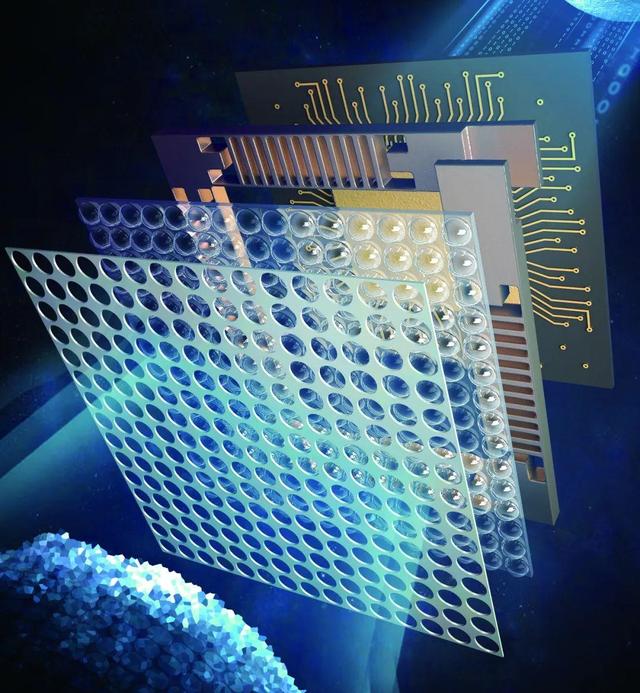
The team of Academician Dai Qionghai and Associate Professor Fang Lu from Tsinghua University has proposed an integrated meta-imaging chip architecture. Distinguished from building a perfect lens, the research team developed a super sensor that records the imaging process rather than the image itself. By realizing ultra-fine perception and fusion of non-coherent and complex light fields, it can still achieve perfect three-dimensional optical imaging even after imperfect optical lenses and complex imaging environments. This technology solves the long-standing bottleneck of optical aberration. It is expected to become the next-generation universal image sensor architecture without changing the existing optical imaging system, bringing disruptive changes that will be applied to astronomical observation, bio-imaging, medical diagnostics, mobile terminals, industrial inspection, and security monitoring.
16 Chinese researchers make breakthroughs in surface-iso-polarized exciton-type laser research
The team of academician Li Ruxin and researcher Tian Ye from the State Key Laboratory of Strong-Field Laser Physics, Shanghai Institute of Optics and Precision Machinery, Chinese Academy of Sciences (SIPM, CAS), has made a breakthrough in the research of new surface-isotropic polarization exciton (SPP) type lasers. The research team explored the dynamics of SPP pumped by femtosecond laser-driven ultrashort electron pulses, discovered the process of SPP-type laser "establishment," and elaborated the mechanism of excitation amplification in the process of the interaction between free electrons and SPP, and the research results pointed out a brand-new way of realizing the SPP-type laser source, and the related results were published. The relevant results were published in.

17 China's high-end scientific instruments and add a sharp weapon, the development of the first international small animal in vivo energy spectrum micro-CT
The project team of the Nuclear Technology Application Research Center of the Institute of High Energy of Chinese Academy of Sciences (IHE) has successfully developed the first international small animal in vivo energy spectrum micro-CT (computed tomography) equipment after four years of technological research, which can reproduce the fine structure of organs and tissues of the animal body with micron-level resolution and multi-spectral images, realizing the progress of animal experiments from in vivo to isolated, from black-and-white to color, and thus providing more advanced scientific instruments and experimental means for biomedical research. This will provide more advanced scientific tools and practical means for biomedical research. This technology has won the first prize in the Science and Technology Progress Award issued by the Chinese Society of Somatology.

18 256 trillion frames per second, the world's fastest light field camera
Professor Li Zhengyin of the School of Optics and Electronic Information of Huazhong University of Science and Technology (HUST) and his team realized a frame rate of 256 trillion frames per second by obtaining the phase information of the light field, creating the world's fastest light-field camera at present. The ultra-fast light-field camera will gain applications in two areas, one is to serve large laser devices, and the other is to suit industrial applications. Installing the ultra-fast light field camera module is expected to let the laser precision processing equipment grow an "eye" through the real-time acquisition of probe light signal and observation of the material ultra-fast time scale corresponding to the processing process to make dynamic optimization. Related results were published.

19 China's first fully autonomous computational lithography EDA software was developed successfully
"OPC is a chip design tool EDA industrial software; without this software, we cannot build the chip even if there is a photolithography machine. From basic research to industrial application, our team has insisted on the lowest level of code line-by-line knocking, the most basic formula one-by-one calculation, for a decade. Ten years of grinding a sword is to solve the chip from design to manufacturing the necklace problem." Huazhong University of Science and Technology, School of Mechanical Sciences, Professor Liu Shiyuan's team successfully developed China's first wholly independent and controllable OPC algorithm software and has been in the Yu Wei Optical Software Co., Ltd. to achieve the results of the transformation and industrialization, to fill the gaps in the country.

20 "Quartus I" Lyman Alpha Solar Telescope First Picture Released
On December 13, 2022, the first batch of scientific images of China's first comprehensive satellite dedicated to solar exploration, "Quartus I," was released to the public, in which the Lyman Alpha band and 360nm band full-sun images were obtained by the Lyman Alpha Solar Telescope developed by Changchun Institute of Optical Mechanics, Chinese Academy of Sciences (CIOM). The release of the two first images marks the zero breakthroughs of China's full-sun observation in the space Lyman alpha and 360nm bands. It is also the first time that the Lyman alpha full-sun image of the Sun is captured by a satellite-based instrument in the international arena. The device can continuously observe the Sun in these two bands for an extended period, making China's solar observation in this band an independent data source. It will also open the data to scientists worldwide for scientific and space weather forecasting research.

You Might Also Like
-

15w Far UVC Light Module 222 UV Light Safe Disinfection T...
-

222nm UV Light For Sale Filtered 222nm Pure Far UVC Lamp
-

Far UVC Light 222 nm 120w Far UV Disinfection Hand Steril...
-

280nm UV Narrow Band Pass Filter For Life Sciences
-

Blue Light Filter Glasses For Microscope
-

Orange Colored Glass Light Filters For The Spotlight