

The Incredible Optics of Lenses
Aug 11, 2023
Lenses are transparent optical components with curved surfaces that refract light to produce images, alter beam characteristics, or change light convergence and divergence. Since ancient times, simple lenses have been used to ignite fires and magnify objects. Today, sophisticated lens engineering drives the optics underlying photography, microscopy, lasers, astronomical observation, and many industrial processes.

Lenses manipulate light utilizing refraction and dispersion. Light passes between materials of different refractive indices and bends based on the optical density difference. Lens curvature and material choice control how incoming light rays converge or diverge. Convex lenses concentrate parallel light rays to a focus point, while concave lenses spread light.
Chromatic dispersion in lenses separates light into component wavelengths. With minimal distribution, crown glass lens materials like borosilicate transmit light across the visible spectrum. Flint glass lenses contain additives to boost dispersion for applications like prism spectroscopy. Achromatic doublet lenses combine crown and flint glasses to limit color distortion.
Aberrations such as spherical and chromatic distortion plague primary lens function. Sophisticated multi-element lens combinations minimize aberrations for sharp, accurate image formation. Coatings like magnesium fluoride thin films improve transmission and reduce internal reflections. The modern computer-aided design optimizes lens prescriptions, exceeding classic symmetrical configurations.

Aspherical optics enhance lens performance where spherical surfaces fail. They minimize spherical aberration and the need for extra elements to correct the defect. Precision glass molding, computer-controlled surfacing, and thin film deposition allow mass production of these challenging optics.

Specialty lenses serve essential roles in technology and research. Achromats for microscopes, low dispersion lenses for lasers, and ultra-low expansion glass for space telescopes increase optical precision. Graded index lenses bend light in a controlled way without surface curvature. Acoustic-optic modulation lenses alter light using sound waves. Liquid crystal lenses enable electrically variable focus.

Lenses drive photography from cell phone cameras to high-end cinema lenses. Medical endoscopes rely on fiber optic lens imaging. Industrial lasers focus on intense beams using specialized lenses. Astronomical observatories employ vast telescope optics to peer deep into the cosmos. From ubiquitous spectacles to shaping light fields, lenses bring the world into focus.
You Might Also Like
-

Far UVC Disinfection Gate Safe Disinfection Solution of U...
-
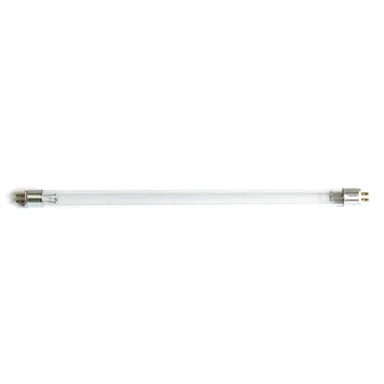
Sterile Light Germicidal Ultraviolet Light for Air Purifier
-

Narrow Bandpass Filter 405nm Optical Filter
-
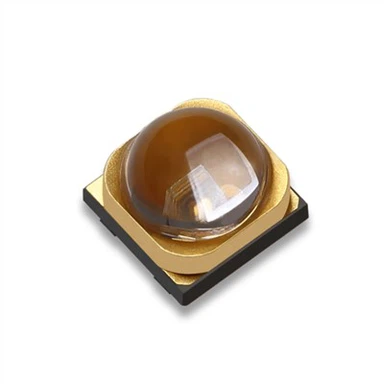
UVC LED 275nm 3535 High Power UVC LED
-

Spherical Lens For Cellphone Cameras
-

90 Degree Prism Right Angle Prism For Periscopes And View...